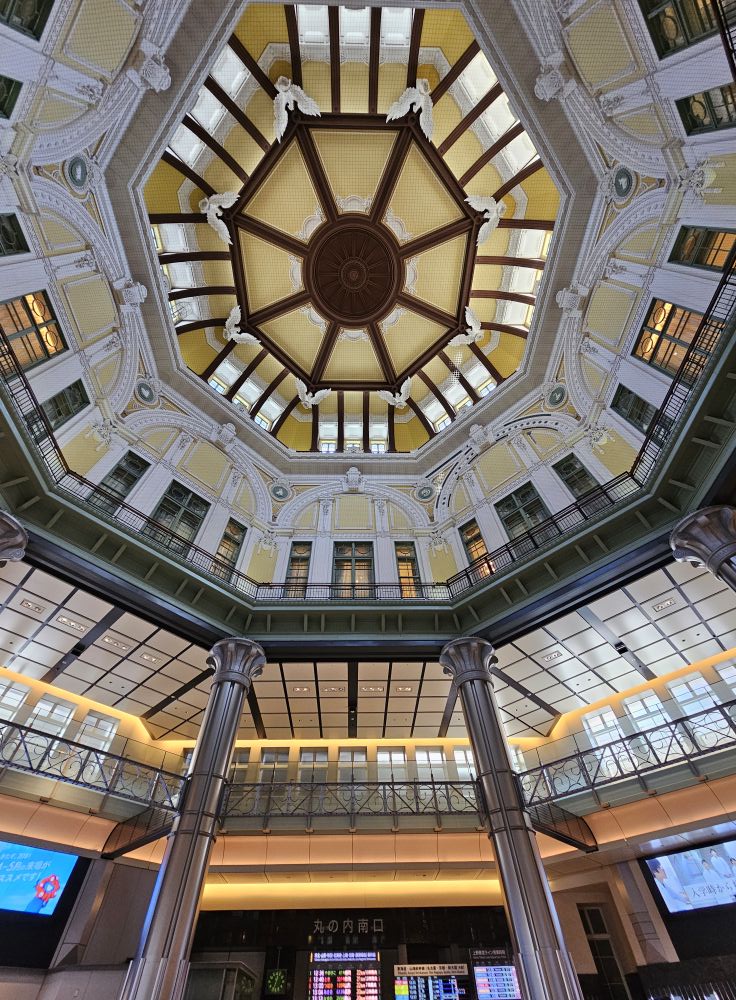
Navigating the Maze: Your Guide to Tokyo Station
Tokyo Station is more than just a transit hub; it’s a city within a city. With over 4,000 trains arriving and departing daily, it’s one of the busiest stations in Japan and can feel intimidating for first-time visitors. But don’t worry. With a few key tips, you’ll be navigating it like a pro.
Know Your Sides: Marunouchi vs. Yaesu
The most important thing to remember is that Tokyo Station has two distinct personalities: the Marunouchi side and the Yaesu side.
- Marunouchi (West Side): This is the historic, elegant face of the station. Here you’ll find the iconic red-brick building, which is beautifully lit at night. The Marunouchi exits lead to the Imperial Palace and the upscale Marunouchi business district.
- Yaesu (East Side): This is the modern, commercial side. It’s where you’ll find the Shinkansen (bullet train) entrances and the JR Expressway Bus Terminal. The Yaesu exits provide direct access to department stores like Daimaru and the famous Tokyo Ramen Street, as well as the commercial districts of Ginza and Nihonbashi.
Follow the Colors: A Simple Solution
Tokyo’s rail network is famous for its efficiency and its color-coded signs. This system is your best friend when navigating the station. Look for signs with the name of your line and its corresponding color.
- JR Yamanote Line: Yellow-green
- JR Chuo Line: Orange
- JR Keihin-Tohoku Line: Light blue
- Shinkansen (Bullet Trains): Look for signs marked with “新幹線” and their specific line colors.
Essential Tips for a Smooth Journey
- Download an App: Google Maps is highly effective in Tokyo. It provides real-time train schedules, platform numbers, and even suggests which car to board for the quickest transfer.
- Get a Suica or PASMO Card: Forget fumbling with cash at ticket machines. These rechargeable IC cards are essential for convenience. Simply tap to enter and exit the gates. You can also use them at many convenience stores and vending machines.
- Shinkansen Transfers: If you’re transferring to a Shinkansen, you’ll need a separate Shinkansen ticket. Look for the dedicated transfer gates inside the main JR area. It’s a good idea to give yourself at least 15-20 minutes for this transfer, as the walk to the platforms can be long.
- Don’t Panic: If you get lost, just look for a staff member at one of the manned ticket gates. The Japanese are known for their helpfulness, and they will gladly point you in the right direction. Remember, even locals get a little turned around in this massive station.
Tokyo Station is a destination in itself, with a vast underground shopping and dining area. By understanding the basics and keeping these tips in mind, you can transform your trip from a potentially stressful experience into a seamless adventure. It’s perfect for a rainy day. Don’t spend it stuck inside your hotel, go explore the underground world of Tokyo Station! Collect your train stamps, enjoy some world class ramen, and take in the sights. It’s a city in it’s own right. A city within a city.



 Chasing Cherry Blossoms: A visual travel diary
Leave a comment